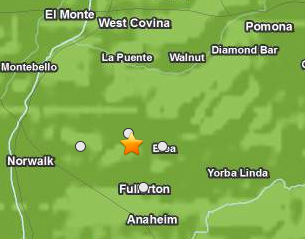
Emergency Activation #105: A lunchtime earthquake of Richter magnitude 5.4, centered in the Chino Hills, caused an immediate activation of HDSCS on July 29, 2008. Several members established an on-air net within seconds and began to check the status of our supported facilities by telephone and personal visit. Fourteen of 35 Orange County hospitals were within 15 miles of the epicenter, making them our highest priority. Communications disruptions at these hospitals were brief except at Kindred Healthcare in Westminster, where phone lines to the outside went down for approximately 30 minutes. Fred Lochner WA6FRA discovered this when he went to check on the hospital. He remained to provide backup communications until service was restored. Minor injuries from falling parts of a drop ceiling occurred at a therapy and wellness center in Brea that is operated by St. Jude Hospital in Fullerton. Paul Broden K6MHD went to the Command Center at St. Jude and was prepared to communicate with the Brea site, but that building was quickly evacuated and a response there was not needed. Within 90 minutes, our net had determined the status of all Orange County hospitals and had passed this information to OC Emergency Medical Services Agency. We also established communications with the Amateur Radio nets of Orange County RACES, Los Angeles County ARES and Orange County Red Cross. HDSCS Net Control stations were Paul Broden K6MHD and April Moell WA6OPS. Other participating members were Bob Bertels N6VAN, Tom Gaccione WB2LRH, Fred Lochner WA6FRA, Susan Hafner KD6YMH, Dennis Kidder W6DQ, Jim McLaughlin AB6UF, Joe Moell KØOV, Dale Petes KI6ANS, Jackie Schaffer WA6AKP, Jon Schaffer W6UFS, Cheryl Simpson KD6MWZ, Ken Simpson W6KOS, Clay Stearns KE6TZR, Matthew Stofle W7MWS, Alex Valdez K9BLK, Corky Walker KG6YWY, John Walker AC7GK, Dave West KI6EPI, Woody Woodward NJ6W and Larry Woolf KF6YCM.
* ReddiNet® is a commercial UHF digital inter-hospital communications system sold to hospitals by Healthcare Association of Southern California and maintained by the Communications Department of the County of Orange.
Next page is the Certified Hospital Communicator Program -- Recognizing the experience and competence of our members
Back to the HDSCS home page
This page updated 1 September 2008

Emergency Activation #104: A failure in the telephone system at Mission Regional Hospital occurred on July 28, 2008 as workers were servicing the uninterruptible power supply (UPS). The hospital's Disaster Coordinator followed the established procedures to notify HDSCS. Our Assistant Coordinator Jim McLaughlin AB6UF received the hospital's call and immediately contacted John and Corky Walker, AC7GK and KG6YWY, who were driving in the area. John and Corky arrived at the hospital within ten minutes of being alerted and learned that one building had lost the use of all telephones. They put out a call for more operators and began handling messages between the two parts of the facility, supplementing the business-band transceivers that a few of the hospital staff members had been using. The phone outage lasted approximately four hours, after which the ham operators stood by for an additional half hour to make sure that the system was stable. Other hams who served at the hospital or were en route when repairs were completed were Bill Hegardt K6WIL, Jim McLaughlin AB6UF, Al Way KC6LNP and Dave West KI6EPI. Net Control and outside base station operators were Paul Broden K6MHD and April Moell WA6OPS.

Emergency Activation #103: At about 5 PM on Sunday, June 22, 2008, HDSCS member Jim Riedel K6EEE returned home to find that power was out at his home and in his neighborhood. Traffic lights were also out in the area. Following established procedures, Jim checked on his nearest hospital, Saddleback Memorial in San Clemente. When he couldn't get through, he grabbed his go-kit and headed for the hospital, alerting Coordinator April Moell WA6OPS as he left. Just before he arrived at the hospital, HDSCS was officially activated by a cell phone call from the hospital. Jim quickly established Amateur Radio communications from the hospital's Command Center. Meanwhile, April had two additional operators, John and Corky Walker, AC7GK and KG6YWY, alerted and on the way to the hospital. Internal telephone communication in the facility was normal and most outgoing calls could be made, but incoming calls were not getting through. April notified the EMS Central Point that the hospital could be contacted via HDSCS for incoming emergencies while Joe Moell KØOV served as outside Net Control and base station. Commercial power was restored at 6:19 PM but HDSCS stayed on site until 7 PM to insure that all power and telephone systems were stable.
Emergency Activation #102: At 9:35 AM on February 1, 2008, April Moell WA6OPS received a cell phone call from the Disaster/Safety Coordinator for Saddleback Memorial hospitals at Laguna and San Clemente. A telephone switch failure had occurred at the San Clemente facility, rendering half of the outgoing circuits inoperable and the other half subject to overload. April activated Core Team responders John and Corky Walker, AC7GK and KG6YWY, who arrived at the hospital in less than 25 minutes. John set up and operated his portable station at the hospital Command Center, while Corky became a radio "shadow" for the House Supervisor. Meanwhile, Dave West KI6EPI was activated to the Laguna facility to set up a backup link. April served as outside base station to make phone calls as needed. Circuits were repaired by 11:10 AM, after which our members remained on site for a half hour to make sure that the communications systems were stable.

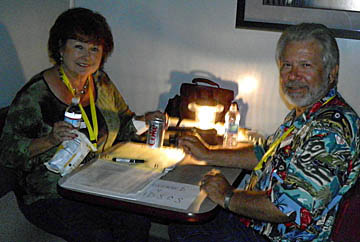
Emergency Activation #101: At 9 AM on Sunday, October 21, 2007, HDSCS was paged by the Orange County EMS Communications Center. A power failure had occurred at Chapman Medical Center in Orange and there were intermittent problems with the generator. External telephone communications had completely failed and internal phones were intermittent. A HDSCS net was activated and Ken Simpson W6KOS immediately went to the hospital, arriving in about 25 minutes (photo at right). Following soon after were Dale Petes KI6ANS, Clay Stearns KE6TZR and Dave West KI6EPI. To provide internal communications, they deployed to the Emergency Department, Intensive Care Unit, a medical-surgical unit and a sub-acute care unit. April Moell WA6OPS and Tom Gaccione WB2LRH made calls to line up additional operators to relieve the first responders if needed. Telephone technicians arrived to fix the phones at about 10:30 AM and the lines were working again about 40 minutes after that. HDSCS operators remained on the units until 11:45 AM to make sure that the system was stable before securing operations. Cheryl Simpson KD6MWZ was the primary net control and outside base station during this event.
Emergency Activation #100: Shortly after 8 PM on July 11, 2007, Assistant Coordinator Jim McLaughlin AB6UF received a cell phone call from the House Supervisor at Tustin Hospital Medical Center. Power had gone down, all phones were down, and the hospital's ReddiNet* terminal was not functional. It was believed that a nearby power transformer had failed. Jim immediately contacted April Moell WA6OPS and put his base station on the air to coordinate the responding operators. Jim alerted the county's ReddiNet Central Point of the hospital's problem and advised how the Central Point could contact HDSCS for message relay into the facility. Meanwhile, April and her husband Joe KØOV were contacting HDSCS members on the "First Wave" callup sheet. Within 26 minutes of the hospital's call, two HDSCS communicators were on site and connecting to the hospital's rooftop antenna (see photo at left of antenna installation four weeks earlier). They were Allen Bullock KD6LCL and Dave Mofford W7KTS. A third operator, Bill Hegardt K6WIL, was coming in the door at that moment, too. Fortunately, power was restored and phones were back on line within a few minutes. Three additional operators, already on the way, were called off. The three operators on site went into our standard 30 minute "holding pattern" to make certain that phones were remaining up. Although this was not a major activation, it served as an excellent "scramble drill." Our rapid response showed the benefits of the prior meetings and drills with this hospital and all the others in the county. Hospital staff members on duty knew that HDSCS exists and they knew how to contact us. Our plan for activating operators led to a rapid response, not only because we had identified the members living closest to that facility, but also because these members had their portable radio gear at the ready.

Emergency Activation #99: On March 21, 2007, the Telecommunications Supervisor at an Orange County trauma center alerted HDSCS by group page of a telephone failure. Our attempts to call into the hospital were met with rapid busy signals, confirming the problem. For the next hour, HDSCS Coordinators made calls to members to activate communicators to the facility. Within an hour, two HDSCS responders were on site and three more were about to enter the facility's driveway. At that point, the hospital Incident Commander declared the situation to be stable and released the communicators. Responders were Galel Fajardo KB6MOH, David Mofford W7KTS, Ken Simpson W6KOS, Corky Walker KG6YWY and John Walker AC7GK. Net Control was April Moell WA6OPS.
Emergency Activation #98: Telephones at Saddleback Hospital in San Clemente became unstable during the morning of March 20, 2007. Hospital staff used the HDSCS call-up list to contact Jim Riedel K6EEE via cell phone. Jim alerted April Moell WA6OPS and proceeded to the hospital with his go-kit. April served as Net Control and contacted the Orange County Communications Center to advise that if hospitals, fire departments or others were unable to contact the hospital, they could call April for radio message relay into the facility. The Safety Director at a sister Saddleback hospital in Laguna Hills decided that it would be good to have an operator at his facility to have a back-up for contacting San Clemente. John Walker AC7GK, with his equipment at the ready, was activated to Laguna Hills. Phones at San Clemente were repaired not long after our operators arrived, but the hams stayed on location and maintained contact until it was determined that the entire system was stable under load.
Emergency Activation #97: Although HDSCS has developed an excellent alerting system so that hospitals can quickly initiate calls for ham help, sometimes our activations take place because of "heads-up ball playing" by our members. Such was the case on February 13, 2007 at about 11:15 AM, when April Moell WA6OPS visited a store in Buena Park and was told that credit card transactions could not be processed because phone service was out. When she learned that phones were also down in adjacent stores, she decided to check on the closest hospital, which was Anaheim General's Buena Park campus (AGBP). Sure enough, the 31-bed facility was experiencing intermittent failures of incoming and outgoing calls. Paul Broden K6MHD was monitoring the main HDSCS two-meter repeater and immediately headed for AGBP. Jon Schaffer W6UFS was also listening and he hastened to Anaheim General's main campus in Anaheim to provide a direct radio link between the two facilities. Besides serving as a base station contact for Paul and Jon, it was April who made contact with OC-EMS, local authorities and the phone company to expedite the repair of phone problems. Operations were secured at 5 PM when it was determined that phone service was adequate for the low-traffic evening and night hours. Plans were made to resume ham communications for these two hospitals at 9 AM the following day during repairs (see Standbys #85-87 below).

Emergency Activation #96: At 8:20 AM on September 10, 2006, April Moell WA6OPS was alerted by the Orange County Communications Central Point that Chapman Medical Center was on internal diversion status due to a telephone failure. OC Communications had received this information by ReddiNet* and calls to the hospital were unanswered. April immediately began dispatching HDSCS members to that 114-bed facility in the city of Orange. Light Sunday morning traffic aided our quick response. First to arrive at 8:42 was Ken Simpson W6KOS, who found that all internal telephone extensions were inactive. Only one non-PBX line to the outside was working. He began Amateur Radio communications to the outside immediately. Additional operators soon arrived and were deployed to critical areas such the Emergency Department and the Medical/Surgical patient unit. Fortunately, the hospital's telephone technician arrived quickly and was able to diagnose and fix the switching system problem in relatively short order. Phones were fully back up at 10 AM and HDSCS operations secured following our usual 30 minute hold after that. In addition to Ken Simpson, here is an alphabetical list of the responding hams: Paul Broden K6MHD, Joe Moell KØOV, Jon Schaffer W6UFS and Clay Stearns KE6TZR. Three other members were on standby and ready to respond when the all-clear was given. April Moell WA6OPS was the outside base station contact.
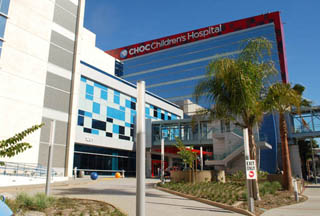
Emergency Activation #95: During construction along Main Street in the city of Orange, fiber optic cables were accidentally severed on the afternoon of 17 August 2006. This caused failure of most of the trunk lines for Childrens Hospital of Orange County (CHOC). The break also affected external tie lines to several hospital units and clinics. April Moell was notified of the outage and the "internal disaster" declared by CHOC's Director of Safety and Security. April dispatched eleven HDSCS members to the hospital to cover critical areas such as the Command Post, switchboard (PBX), Neonatal Intensive Care (NICI), Pediatric Intensive Care (PICU) and medical/surgical units. Early reports indicated that it would take the phone company about six hours to repair the fiber optics, but Murphy's Law was in effect. In working on the cables, construction equipment broke into a water main, flooding the ditch and delaying fiber repairs for most of the night (photo above right). There were further delays when some telecom circuit cards failed during reinstallation the next morning. In rotating shifts of four to ten hours each, our HDSCS support continued, utilizing three Amateur Radio repeaters and two UHF simplex frequencies to handle logistics as well as internal and external medical communications. Examples included alerting San Bernardino County hospitals of the need to use Amateur Radio to contact CHOC for patient transfers, relaying the nurse's report on a patient being transferred, and contacting a physician for patient medication instructions. After 22-1/2 hours, all voice phones and most data/FAX lines were restored and our operators were released. These 20 hams responded to CHOC (in alphabetical order): Paul Broden K6MHD, Bruce Chappell KE6TSM, Louie DeArman K6SM, Galel Fajardo KB6MOH, Reid Green KF6LOK, Jack Hafner KO6IC, Tom Hall N6DGK, Fred Lochner WA6FRA, Jim McLaughlin AB6UF, Joe Moell KØOV, David Mofford W7KTS, Heiko Peschel AD6OI, Dale Petes KI6ANS, Ray Rittenhouse KF6WZN, Ken Simpson W6KOS, Jon Schaffer W6UFS, Clay Stearns KE6TZR, Fred Wagner KQ6Q, Dave West KI6EPI and Woody Woodward KJ6LE. Providing base station and landline telephone support from home were April Moell WA6OPS, Joe Moell KØOV, Jim McLaughlin AB6UF and Susan Hafner KD6YMH.
Alerts, Drills and Standby Operations

Drill #162: Orange Coast Memorial Medical Center simulated a HazMat incident with chemical exposure as the scenario for its drill on Wednesday, June 25, 2008. Following established procedure, the hospital activated HDSCS via pager at the point in the drill when it was notified of the HazMat incident at a sporting event and activated its emergency Command Center. Responding to the hospital to provide backup communications were Ken Simpson W6KOS, Corky Walker KG6YWY and John Walker AC7GK. They were deployed to the hospital's Command Center, Emergency Department and Intensive Care Unit. Since no other agencies were active in this drill, Jim McLaughlin AB6UF and April Moell WA6OPS simulated communications for Emergency Medical Services Agency and the city EOCs of Fountain Valley and Huntington Beach, handling such messages as requests for HazMat mitigation supplies. Fred Lochner WA6FRA simulated a response to and message handling with Saddleback Memorial Hospital, a sister facility. Paul Broden K6MHD was Net Control.
Drill #161: West Anaheim Medical Center (WAMC) staged a drill on June 4, 2008 that was quite similar to a recent drill at the Saddleback Memorial hospitals (see drill #158). There were two simulated explosions at a sister facility that resulted in about a dozen volunteer victims arriving at WAMC by simulated transport and needing to be decontaminated. Soon walk-in victims were also simulated by hospital employees. The hospital set up and utilized its decontamination and surge capacity tents. Four HDSCS members responded when the hospital used its pre-established alerting procedure. The communicated internally from the Command Center, Emergency Department, Outside Triage and as a staff "shadow." External message traffic was exchanged in simulation of ReddiNet* failure. Going to the hospital were Jim McLaughlin AB6UF, Ken Simpson W6KOS, Fred Wagner KQ6Q and Woody Woodward KJ6LE. Serving as Net Control and outside communicators were April Moell WA6OPS and Jackie Schaffer WA6AKP.

Standby #93: Five HDSCS members arrived at Orange Coast Memorial Medical Center at 8 AM on Wednesday, May 28, 2008 for a brief standby operation. The hospital was upgrading its phone system and needed to shut it all down briefly to complete the project. The hospital treated this as a drill and distributed business-band handi-talkies to some key staff members. We served as additional communicators and "shadows" as needed. Following a staff meeting to orient everyone, the work began and went smoothly. At the hospital were Bruce Chappell KE6TSM, Dan Dawes KD6YPJ, Jim McLaughlin AB6UF, Ken Simpson W6KOS and Fred Wagner KQ6Q. Serving as Net Control and outside base station was April Moell WA6OPS.
Drill #160: A simulated incident at the San Onofre Nuclear Generating Station sent trauma and radiologically exposed patients to Mission Regional Medical Center in Mission Viejo on May 7, 2008. The hospital used this drill to test its HICS procedures, practice decontamination of patients, and utilize Amateur Radio for backup communications. In accordance with established procedures, the hospital followed the paging protocol to activate HDSCS as it opened the emergency Command Center. Two HDSCS members, Bruce Chappell KE6TSM and Galel Fajardo KB6MOH, responded to the hospital to provide communications between the Command Center and the Emergency Department, which are in different buildings on the hospital campus. Another communicator, Jim McLaughlin AB6UF, traveled with the hospital's Public Information Officer (PIO) to Southern California Edison's News/Information Center in Irvine. The base station and Net Control was Ken Simpson W6KOS. April Moell WA6OPS simulated communications with Orange County EMS.

Drill #159: La Palma Intercommunity Hospital held a disaster drill on Friday, April 18, 2008, with HDSCS as an important participant. The hospital simulated two explosions at a medical office building across the street that resulted in numerous casualties, a sewage problem. Failure of all telephone communications and the ReddiNet* were simulated. In accordance with established procedures, hospital staff immediately activated HDSCS via pager to obtain communications support. We provided on-site communications as and sent messages to the outside to obtain additional supplies and provide diversion status to EMS Agency. Members participating were Paul Broden K6MHD, Fred Lochner WA6FRA, Jim McLaughlin AB6UF and Woody Woodward KJ6LE. April Moell WA6OPS was Net Control.
Drill #158: HDSCS participated in a two-hospital drill on March 18, 2008. Saddleback Memorial facilities in Laguna Hills and San Clemente tested their response plans with simulated simultaneous "dirty bomb" explosions in their respective parking lots. Staff members dealt with victim injuries, facility damage, radiological contamination and communications problems. This two-hour drill also involved local fire departments, Orange County Sheriff staff, advisors from San Onofre Nuclear Generating Station and Orange County Emergency Medical Service Agency observers. HDSCS Net Control was Jim McLaughlin AB6UF. Responding to the two hospitals were Tom Hall N6DGK, Ken Simpson W6KOS, Corky Walker KG6YWY and John Walker AC7GK. Simulating other agencies and performing message relays were Allan Bullock KD6LCL and Jim Riedel K6EEE.
Standby #92: A 12-hour standby operation at Irvine Medical Center on January 18 kicked off HDSCS communications activities for 2008 An old telephone system was being replaced and circuits for a new building were being added. This necessitated a total telephone outage, followed by intermittent partial outages for several hours. Work began at 10 PM Friday and was not fully completed until 9:30 AM Saturday. According to John Walker AC7GK, who was one of the Command Center operators, "We handled a lot of message traffic. In my log, I have calls to Security, to Housekeeping, a request for a Respiratory Therapist, and coordination of admissions. All the while, we were keeping staff informed of the progress of the phone work and advising technicians of problems in restored phone banks. Everyone performed smoothly and efficiently. The radio contacts were concise and professional." Other communicators in the hospital were Galel Fajardo KB6MOH, Tom Gaccione WB2LRH, Tom Hall N6DGK, Bill Hegardt K6WIL, Mark Kern KE6QXF, Scott Lolmaugh WD8ICK, Jon Schaffer W6UFS, Corky Walker KF6LOK and Larry Zysman N6BNM. Taking shifts as HDSCS base stations, available to make calls to any outside location, were Jim McLaughlin AB6UF, April Moell WA6OPS, Ralph Swanson WB6JBI, Ken Simson W6KOS.
Standby #91: An area-wide power failure affected portions of San Clemente beginning about 9:30 PM on Christmas Eve 2007. Jim Riedel K6EEE immediately went to check on the Saddleback Hospital building in that city. Fortunately, the power failure did not affect internal/external telephones. Jim remained on site, in radio communication with Assistant Coordinator Tom Gaccione WB2LRH. They notified the county's Emergency Medical Services Central Point of the situation. Power was restored at 10:53 PM and Jim remained on site until 11:35 PM.

Drill #157: Golden Guardian, a statewide homeland security and disaster preparedness exercise, is the largest of its kind in the nation. It is intended to improve coordination of governments at all levels, volunteer organizations and the private sector for response to manmade and natural emergencies. Orange County hospitals and agencies held a major Golden Guardian exercise on November 14, 2007, and HDSCS played an important part. A mock explosion took place at Angel Stadium just before 10 AM (photo at left by WB2LRH), with about 300 volunteer "victims" either at that site or pre-staged at the participating hospitals. HDSCS members were dispatched to the Orange County Emergency Medical Services (OC-EMS) Departmental Operations Center, the OC Emergency Operations Center (EOC) at Loma Ridge, and 15 hospitals, including 3 trauma centers. We also provided drill coordination support to EMS officials at the explosion site. As usual, we insisted that each hospital follow its pre-established activation procedures, to insure that they will be familiar with them in the next actual emergency. Our members practiced rapid response and equipment setup in each hospital. Working shoulder-to-shoulder with hospital personnel, we passed requests for ventilators and other equipment, as well as calls for additional medical staff. We also handled patient messages, such as coordinating the transport of a burn victim to a special treatment facility. Supporting EMS personnel were Tom Gaccione WB2LRH, Jim McLaughlin AB6UF and Ken Simpson W6KOS. Responding to the hospitals were Bruce Chappell KE6TSM, Louie DeArman K6SM, Kim DeCelles K9KIM, Tom Hall N6DGK, Bill Hegardt K6WIL, Roman Kamienski KG6QMZ, Bob McCord K6IWA, Dave Mofford W7KTS, Dale Petes KI6ANS, Jim Riedel K6EEE, Clay Stearns KE6TZR, Matt Stofle W7MWS, Alex Valdez K9BLK, Fred Wagner KQ6Q, Corky Walker KG6YWY, John Walker AC7GK, Al Way KC6LNP and Woody Woodward KJ6LE. Net Controls and base stations were April Moell WA6OPS and Ralph Swanson WB6JBI.

HDSCS was on high alert as the Santiago Wildfire threatened homes and facilities in eastern Orange County. The arson-caused blaze, which began about 6 PM on Sunday, October 21, 2007, consumed over 27,000 acres. The point of origin was approximately two miles from the hilltop Orange County Emergency Operations Center (OC-EOC), which houses the ReddiNet* Central Point. At 6:30 PM Sunday, HDSCS activated a two-meter net and sent Jon Schaffer W6UFS to the OC-EOC. This was to insure that backup communications would be available there, even if roads became impassible. Shortly thereafter, Allen Bullock KD6LCL was deployed to the OC Heathcare Agency's Strategic Operations Center. W6UFS was later relieved by Bruce Chappell KE6TSM, who remained at OC-EOC until 6 AM Monday. During that time, HDSCS monitored the status of all nearby hospitals, including Chapman Medical Center, Tustin Hospital, Irvine Regional Medical Center, Western Medical Center of Santa Ana and Saddleback Hospital of Laguna Hills. With the immediate threat to the OC-EOC relieved and hospitals not requiring on-site support, HDSCS moved on Monday morning to a high-alert status with constant but informal net presence, as well as checks on potentially affected hospitals as appropriate. Members also used this net to keep Coordinators apprised of their availability for immediate deployment if conditions change. The formal net was discontinued on Wednesday evening and the Statewide Medical Exercise took place as planned on Thursday (see next item). Net Control stations for the fire alert included April Moell WA6OPS, Joe Moell KØOV, Jackie Schaffer WA6AKP, Cheryl Simpson KD6MWZ, Ken Simpson W6KOS, Clay Stearns KE6TZR, Dave West KI6EPI and Woody Woodward KJ6LE. (Photo by Orange County Supervisor Bill Campbell)
Drill #156: Amid southern California wildfires, the annual California Statewide Medical and Health Disaster Exercise took place on October 25, 2007. Although accreditation requirements call for every hospital to drill at least twice annually, most Orange County hospitals opted out of this drill because of wildfire activity and their upcoming participation in a much larger county exercise that is scheduled in November. Only 4 HDSCS-supported hospitals were in the statewide drill this time, compared to 17 in the previous year. Hospitals were encouraged to test their surge capacity plans and drill throughout the day, to practice change-of-shift procedures. Our involvement began at 7 AM and ended at 4 PM. Hospitals originated messages appropriate for their drill scenarios and practiced new Hospital Incident Command System (HICS) procedures. Communicators at the hospitals were Bill Hegart K6WIL, Bob McCord K6IWA, Jim Riedel K6EEE, Clay Stearns KE6TZR, Corky Walker KG6YWY, John Walker AC7GK and Woody Woodward KJ6LE. April Moell WA6OPS and Ken Simpson W6KOS served as outside base stations and net controls.

Drill #155: HDSCS was heavily involved in the yearly Radio Amateur Civil Emergency Services (RACES) drill for Orange County that took place on Saturday, October 6, 2007. The scenario was a historic rainstorm that caused flooding in the county and the eventual failure of Prado Dam. Our goal was to pass simulated messages between each of our supported hospitals and their local municipalities as represented by city and county RACES organizations, in accordance with our Memorandum of Understanding. Also included were typical messages that would be relayed for the Orange County Emergency Medical Services' Agency Operations Center (EMS-AOC) and the EMS dispatch Central Point. We also exchanged messages with Orange County Red Cross. Over 50 messages were originated by HDSCS in the two-hour drill. There were also many replies to these messages handled, as well as message traffic for us that was originated by the RACES groups. Many of these messages were relayed on two HDSCS nets, a main net and a special net for south OC. These nets were busy non-stop! Other messages were passed via various city/county RACES repeaters and simplex frequencies. HDSCS Net Control operators were April and Joe Moell, WA6OPS and KØOV. Other participating HDSCS members were Paul Broden K6MHD, Kim DeCelles K9KIM, Tom Gaccione WB2LRH, Tom Hall N6DGK, Fred Lochner WA6FRA, Scott Lolmaugh WD8ICK, Bob McCord K6IWA, David Mofford W7KTS, Dale Petes KI6ANS, Jim Riedel K6EEE, Jackie Schaffer WA6AKP, Jon Schaffer W6UFS, Clay Stearns KE6TZR, Matthew Stofle W7MWS, Alex Valdez K9BLK, Fred Wagner KQ6Q, Corky Walker KG6YWY, John Walker AC7GK and Dave West KI6EPI.
Drill #154: On the weekend of September 15 - 16, 2007, HDSCS members participated in a Volunteer Mutual Aid Drill (VMAD) at the Orange County Sheriff's Laser Village training facility. Learning modules were presented, followed by simulated scenarios. Communicators from local CERT groups, RACES, and Red Cross took part. Saturday's participants were Tom Gaccione WB2LRH, Kim DeCelles K9KIM and Clay Stearns KE6TZR. Galel Fajardo, Sr. KB6MOH, Galel Fajardo, Jr. KD6AYP and Larry Woolf KF6YCM were there on Sunday.

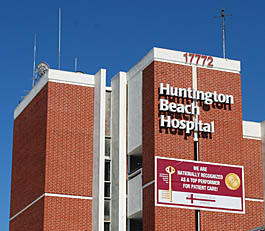
Standby #90: HDSCS operators took their go-kits to Huntington Beach Hospital on June 9, 2007 while workers relocated a 200-pair telephone cable as part of a construction project. For almost three hours, all phones were out in the Laboratory, Radiology and Operating suites. The hams passed medical messages into and out of these critical areas, including laboratory results and requests for blood draws. At the hospital were Tom Gaccione WB2LRH, Scott Lolmaugh WD8ICK, Matthew Stofle KI6BLY and Dave West KI6EPI. Outside base stations were David Mofford W7KTS and Ralph Swanson WB6JBI.
Drill #153: HDSCS was a major player in an Urban Area Strategic Initiative (UASI) drill on June 6, 2007. On that Wednesday morning, 27 HDSCS communicators took positions at command posts, base stations and in a special place called the "SimCell." We were simulating relief operators on the sixth day of a bioterrorism event. Although the 3-1/2 hour drill was part of a UASI grant to the cities of Santa Ana and Anaheim, 18 hospitals in nine cities of northern and central Orange County participated. This was realistic because Orange County Emergency Medical Services agency would coordinate these hospitals for transfer of patients and obtaining additional supplies in an actual emergency of this type. The outside consultant firm that scripted this drill obtained a special offsite location with staff to make phone calls into hospital command posts during the drill, simulating various departments and outside entities. The OC-EMS Departmental Operations Center (DOC) was also activated, communicating via telephone, 800 MHz county government radio, digital ReddiNet and Amateur Radio. HDSCS communicators were in the hospital command posts, at home base stations, and in the SimCell. Several new HDSCS members received valuable training in this drill. About half of our communicators took time off from work to participate in this important exercise. Assisting at the SimCell were Jim McLaughlin AB6UF and Jim Riedel K6EEE. At hospitals were Paul Broden K6MHD, Allen Bullock KD6LCL, Bruce Chappell KE6TSM, Louie DeArman K6SM, Kim Decelles K9KIM, Tom Gaccione WB2LRH, Bill Hegardt K6WIL, Ted Kramer NB6N, Fred Lochner WA6FRA, Bob McCord K6IWA, David Mofford W7KTS, Jackie Schaffer WA6AKP, Jon Schaffer W6UFS, Mike Slygh KI6IRA, Clay Stearns KE6TZR, Scott Stys KG6LJY, Alex Valdez K9BLK, Fred Wagner KQ6Q, Corky Walker KG6YWY, John Walker AC7GK, Al Way KC6LNP and Dave West KI6EPI. Providing communications support at the EMS DOC was Ken Simpson W6KOS. April Moell WA6OPS was HDSCS Net Control, assisted by Ralph Swanson WB6JBI at his base station.
Standby #89: It was a record-length standby operation for HDSCS on April 20 and 21, 2007 as members stayed ready for backup communications during major work by Edison on the power distribution system at Childrens Hospital of Orange County. A wing of the facility where the telephone switching equipment is located was without commercial power for almost 27 hours. CHOC requested that HDSCS keep communicators on site Friday evening, overnight, and through Saturday until evening in case problems developed with the phone system while it was on emergency power. Sixteen HDSCS members participated in the operation, maintaining communicators on site linked with base stations through the outage. At the hospital were Paul Broden K6MHD, Bob Evans W9TQC, Mark Kern KE6QXF, Bruce Lent K6HRU, Scott Lolmaugh WK8ICK, Heiko Peschel AD6OI, Ken Simpson W6KOS, Clay Stearns KE6TZR, Alex Valdez KG6WKK, John Walker AC7GK and Dave West KI6EPI. Handling base station duties were Jim McLaughlin AB6UF, April Moell WA6OPS, Joe Moell KØOV, Dave Mofford W7KTS and Cheryl Simpson KD6MWZ.

Standby #88: HDSCS member Al Way KC6LNP was on standby at Saddleback Hospital in San Clemente hospital on the evening of April 19, 2007 during relocation of the trunk lines in the telephone switch. He was linked with base station Jim McLaughlin AB6UF during the work, ready to call for additional operators if something had gone wrong. Several additional members in central and southern Orange County were ready to respond if they had been needed.
Standbys #85, #86 and #87: HDSCS members provided backup communications during critical hours for three days as telephone problems were diagnosed and repaired following the area-wide outage of February 13, 2007 (see Activation #97 above). Some non-functional trunk lines were found at both the Anaheim and Buena Park campuses of Anaheim General Hospital. Our communicators were stationed at both facilities on February 14, 15 and 16 (20 hours total) to provide a direct link. They were Allen Bullock KD6LCL, Louie DeArman K6SM, Reid Green KF6LOK, Fred Lochner WA6FRA, David Mofford W7KTS, Dale Petes KI6ANS, Ken Simpson W6KOS and Fred Wagner KQ6Q. Providing outside base station support were Jim McLaughlin AB6UF, April Moell WA6OPS, Jackie Schaffer WA6AKP, Clay Stearns KE6TZR, Ralph Swanson WB6JBI and Dave West KI6EPI.
Drill #152: HDSCS participated in a two-hospital drill in southern Orange County on the morning of January 18, 2007. The Saddleback Memorial Medical Centers in San Clemente and Laguna Hills enacted a security-related scenario. This was a good opportunity for us to explain how we would be utilized in an actual emergency of this nature, and to participate in the debriefing afterward. We also tested some alternate communication paths for the southern region of the county. Participants were Jim McLaughlin AB6UF, David Mofford W7KTS, Clay Stearns KE6TZR, Corky Walker KG6YWY and John Walker AC7GK.
Meetings and Other Activities


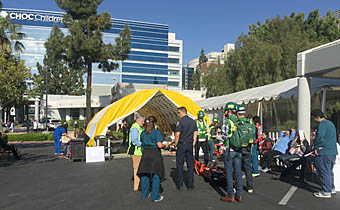
HDSCS provided all communications for the St. Joseph Hospital Medical teams at the 2008 Disneyland Half-Marathon on August 31 2008. An estimated 14,000 runners took to the course that went through Disneyland and out into Anaheim, as far away as Anaheim Stadium. Twenty-two HDSCS members were up well before dawn get into place at medical aid stations at the finish and thoughout the route (photo at right). They also roamed the course on bicycles with the medical teams and provided communications at critical water stations.
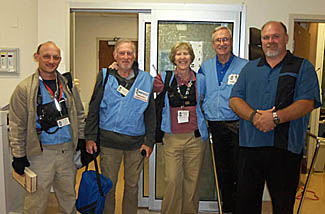
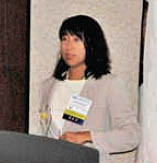
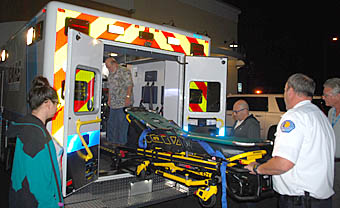
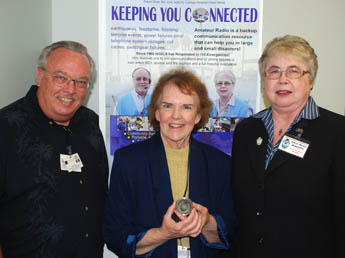
Field trips to UCI Medical Center were among the summer 2008 activities for HDSCS. Between July 23 and August 21, small groups of members received the opportunity to visit important areas within this Trauma Center facility, including the Emergency Department, Intensive Care, Critical Care, Neonatal Intensive Care, Pediatric Intensive Care and Burn Unit. Our host and guide was Sherlene Stepp, RN and Clinical Nurse Supervisor at UCI-MC (in center of photo above left).
The annual HDSCS Termite Contest took place during the entire month of August. Members were encouraged to "come out of the woodwork" and talk to their fellow members on the primary HDSCS two-meter repeater. Points for on-air activity were awarded and highest scorers will receive prizes at the next HDSCS membership meeting.

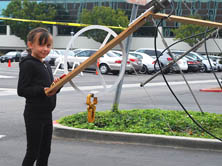
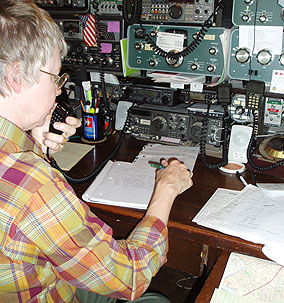
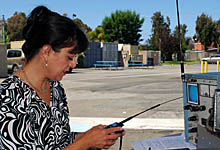
Field Day is an annual communications preparedness exercise of the American Radio Relay League in which HDSCS has participated for many years. 2008 was the seventh year that our Field Day has taken place at Huntington Beach Hospital, one of our supported facilities, and it has never been better. The hospital's decontamination and surge capacity tents were set up to house our stations and employees and staff were encouraged to visit our operation. One of our stations used a large 20-15-20 meter Yagi with rotatable 40-meter dipole. The setup was so large that the north parking lot was cordoned off and a separate tent and generator were used just for this station. For the second year, Rick Soikkeli AE6RS taught a class on electronics and communications. That was followed by a ham radio licensing and upgrade session with six examinees, all of whom passed. The new hams were put on the air almost immediately. Besides the voice operations (photo at left), three members operated CW mode (Morse Code), two of them doing it through the wee hours of the night. Many thanks to Field Day Co-chairs Dennis Kidder W6DQ and Ken Simpson W6KOS for putting together the event and preparing the results package to submit to ARRL. Also thanks to Kevin Balmforth for the use of his callsign, N6ER (for N-6-Emergency-Room). Click here for a page of photos from Field Day 2008.

HDSCS participated in the annual Long Beach area Scout-O-Rama at Heartwell Park on June 7, 2008. We were part of an Amateur Radio display that also included on-air contacts, Morse code introduction, and hidden transmitter hunting. HDSCS set up a simulated hospital Command Post with two Amateur Radio stations. The mock scenario involved hospital damage and a loss of normal communications. When a Scout arrived to participate, he or she was assigned to one of two HDSCS communicators at the Command Post to handle messages (photo at right). They included requests for blood, patient transfer, and status reports to county Emergency Medical Services. The Scout made the call to the appropriate entity and read the message. They found that it took a little effort to coordinate talking and using the mike button. They also learned about message priority and hospital abbreviations. Scouts who handled messages earned special certificates. This was the sixth year that HDSCS has participated in this Scout event. On-site members who set up the Command Post and assisted with the Scouts were Rebecca Katzen KI6OEM, Dennis Kidder W6DQ, April Moell WA6OPS, David Mofford W7KTS, Jackie Schaffer WA6AKP, Jon Schaffer W6UFS and Ken Simpson W6KOS. Home base stations playing various roles during the traffic-handling included Paul Broden K6MHD, Allen Bullock KD6LCL, Jim McLaughlin AB6UF, Ralph Swanson WB6JBI, John Walker AC7GK and Dave West KI6EPI. Also participating in the Amateur Radio display at this event were members Tom Gaccione WB2LRH, Joe Moell KØOV, Jay Thompson W6JAY and Richard Thompson WA6NOL. Click for a page of photos from this event.

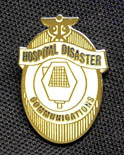
Many HDSCS members are wearing special pins to recognize their prior service to medical facilities. These 1.2-inch HDSCS logo pins are being given to members who have provided Amateur Radio communications within our supported hospitals when telephones were inoperative or overloaded in a planned or unplanned event. Pins are presented to new members after their first service within a hospital under the same circumstances. Approximately fifty HDSCS members have qualified for pins so far. According to HDSCS leader April Moell WA6OPS, "This is a great way to recognize our members for doing what they train and prepare to do, namely to help hospital patients by providing essential communications for their caregivers. Thanks to Dave West KI6EPI for donating these fine pins."
West Anaheim Medical Center hosted the HDSCS membership meeting on May 27, 2008 with some yummy desserts. The meeting topic was "Messages and More." It was a training session by Dennis Kidder W6DQ and April Moell WA6OPS on formal and tactical "traffic" that would be handled in various types of hospital emergencies, ranging from single-hospital phone outages to widespread disasters. Included were pointers on message origination, relaying, net procedures and ordering of supplies. The first certificate for successful completion of the new Certified Hospital Communicator testing program was presented to Ken Simpson W6KOS.

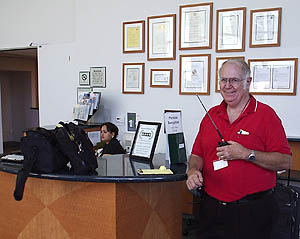
HDSCS was an important part of EMS Appreciation Day at Irvine Regional Park on Sunday, May 18, 2008. Besides a display of our capabilities and awards, we set up two VHF/UHF stations so that young people could send simulated emergency messages. A demonstration of direction finding was also included, showing how hams locate stuck transmitters and other interfering radio signals. Staffing this display and putting the kids on the air were Dennis Kidder W6DQ, April Moell WA6OPS, Joe Moell KØOV, Cheryl Simpson KD6MWZ, Ken Simpson W6KOS, David Mofford W7KTS (at right) and John Walker AC7GK. Base station operators receiving the messages were Jackie Schaffer WA6AKP, Jon Schaffer W6UFS, Ralph Swanson WB6JBI, Jay Thompson W6JAY, Richard Thompson WA6NOL and Dave West KI6EPI.

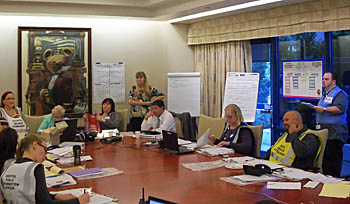
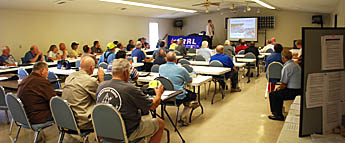
The annual HDSCS Orientation and Review Workshop took place at the Orange County Emergency Operations Center on Saturday, March 1, 2008. It was a full day filled with reviews of basic concepts, procedures, and preparedness, along with updates on handling medical messages and doing realistic drills. Members brought in their "go kits" for show and tell. Just being unveiled across the country is the new Hospital Incident Command System (HICS), which is an important topic for hospital responders. New members were given tours of the EOC and learned about the HEAR/ReddiNet* location. A major highlight of the day was the disaster potluck with everything from meatballs and chicken to stuffed grape leaves, seafood salad, fresh fruit, key lime pie, homemade cake and cookies. Click for more about our annual workshop.

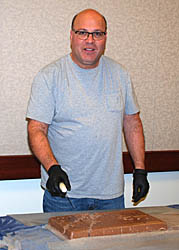
HDSCS held its traditional annual Year-End/Year-Beginning meeting, complete with the "Final Exam" on January 30, 2008 at the Schilling Training Center of Care Ambulance Service in Orange. As always, attendees were divided into teams to answer the questions, which included hospital terminology and practical in-hospital communications techniques. The team with the best score received prizes and everyone got a share of the well-chiseled UBCB (Unbelievably Big Chocolate Bar), plus some very fancy cupcakes. Certificates and HDSCS coins were presented to the most active members of the previous year, the 2007 Disaster Dozen. They are (in alphabetical order): Paul Broden K6MHD, Allen Bullock KD6LCL, Kim DeCelles K9KIM, Tom Gaccione WB2LRH, Jim McLaughlin AB6UF, Joe Moell KØOV, Dave Mofford W7KTS, Ken Simpson W6KOS, Jon Schaffer W6UFS, Clay Stearns KE6TZR, John Walker AC7GK and Dave West KI6EPI. Winner of the Outstanding New Member award for most participation by a new member in 2007 was Kim DeCelles K9KIM.

North Pole Network provided a great finish to 2007. A HDSCS team was activated to Childrens Hospital of Orange County (CHOC) on December 18 to link patients and staff to the North Pole station. This was a busy year with over 50 young patients visited. It took all afternoon to get to them all, especially because many required isolation procedures (photo at right). Santa didn't mind, even though he was into the crunch of getting ready for his Christmas Eve ride. The sleigh was already being loaded and lots of last minute toy assembly work was going on in the workshop. As in previous years, we were amazed at Santa's knowledge of the patients (and toys!) as we went from room to room. Lots of smiles and tears were encountered throughout the day by patients, family members, hospital staff and NPN communicators. It was the best non-emergency of the year! This was the 32nd year of North Pole Network by KØOV and WA6OPS in Orange County and the 27th year of HDSCS's involvement in it. Click for an in-depth report and more photos.

For the second year, HDSCS provided communications support for a free drive-through flu shot clinic at Huntington Beach Hospital on Saturday, November 3, 2007. Our communicators were on location to relay information and keep the event running smoothly and safely. They were stationed at the hospital Command Post, the rooftop observation post, and as "rovers" in the outside areas. Everything went well as about 300 arms hung out of car windows waiting to be stuck. HDSCS participants were Allen Bullock KD6LCL, Bruce Chappell KE6TSM, Kim DeCelles K9KIM, Tom Gaccione WB2LRH, Reid Green KF6LOK and Dave West KI6EPI.
John Zdral, M.D. was guest speaker at the HDSCS membership meeting on November 12, 2007. Dr. Zdral, a Fullerton ophthalmologist, presented medical issues of the eye. Other topics at the meeting were a learning module on "tiger tails" and instructions for the "Golden Guardian" drill.

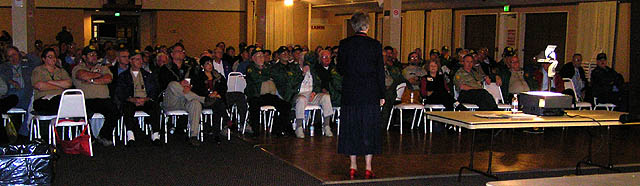
The HDSCS meeting of September 26, 2007 was at the new Kaiser Sand Canyon facility in Irvine. Medical office buildings there are now opening, and the hospital will go into operation in 2008. Our speaker was Rob Viera of Care Ambulance (at left), who talked about ambulance dispatch in Orange County as well as his company's response following Hurricanes Katrina and Rita. Plans for three upcoming drills were also discussed.
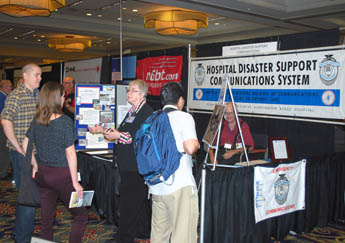
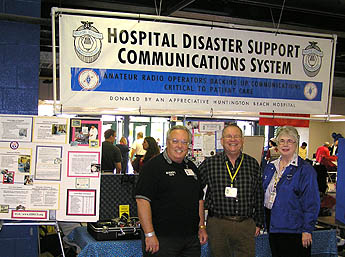
At the 2007 ARRL Southwestern Division Convention, September 7 - 9, HDSCS members took the opportunity to tell other hams about the importance of close contact and support for local hospitals. April Moell WA6OPS presented a forum titled "It's the Network -- What it Takes to Maintain Amateur Radio Support for Hospitals." HDSCS also had a booth in the exhibit hall at the Mariott Hotel in Torrance from Friday evening until Sunday noon for one-on-one discussions with attendees. Helping April at the booth were Tom Gaccione WB2LRH, Roman Kamienski KG6QMZ, Joe Moell KØOV, Ken Simpson W6KOS and John Walker AC7GK.

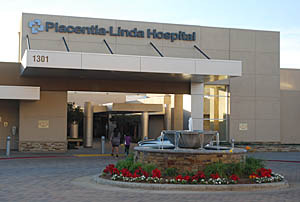
Three members led an all-day CPR and first aid class for HDSCS communicators on June 16, 2007 at Placentia-Linda Hospital (photo at right). "CPR for Healthcare Providers" was taught, including adult, child and infant CPR as well as choking. Our instructors included supplemental medical information to help communicators understand terminology that is likely to be used in messages into and out of emergency departments and intensive care units. Instructors were Bruce Chappell KE6TSM, Jackie Schaffer WA6AKP and Jon Schaffer W6UFS.
At the HDSCS meeting of May 30, 2007, members heard updates on the Hospital Incident Command System (HICS), including Incident Response Guides and Incident Action Plans. Presenter was Mary Massey, who is Surge Capacity Coordinator of the Healthcare Association of Southern California. Plans for an upcoming drill were also discussed.
Outreach

Regular contact with our served hospitals and other agencies insures that HDSCS will be remembered and called out quickly in all Orange County hospital emergency situations. Each year, HDSCS leaders participate in over 25 meetings with Disaster/Safety Committee members from hospitals in the Red, Blue/Green, and Yellow Nets for coordination and drill planning. HDSCS is also represented at regular meetings of the Orange County Emergency Medical Services' Disaster Advisory Group (4 per year) and the ReddiNet* Technical Advisory Group (2 per year). In addition to those meetings, HDSCS has been on the road, explaining our mission to medical care personnel, ham radio operators, and the public in southern California and elsewhere. Special presentations, conferences and exhibitions in recent months include: